Which questions to ask at a parent-teacher conference first?
A practical order for the questions to ask at a parent-teacher conference is grade level first, then one strength, one thing to work on, and how to help at home.

In this guide
A practical order for the questions to ask at a parent-teacher conference is grade level first, then one strength, one thing to work on, and how to help at home.
Conference length is scheduled locally and varies by district or school, so the order decides which answers you actually get. Before you go, review your child's work, grades, and latest report card, and prepare a short list of questions. Walk out with one action that you and the teacher both agreed on.
Why a 15-minute slot changes the order
In a short slot, the questions at the bottom of a long list usually never get asked, so the order matters more than the number. Check how long your school schedules each conference, and put what only the teacher can tell you at the top.
Conference length is decided locally. No national rule was identified; conference length varies by district and school. Signal Hill School District 181 in Illinois, for example, scheduled 20-minute appointments for its fall 2024 conferences. Sultan Middle School in Washington described initial conferences lasting 10 to 15 minutes in fall 2023. Rules vary by district and school; check your school's conference notice for the exact length and whether a second meeting can be booked.
The teacher's day is also packed with meetings with other families. In its report "Parent and Family Involvement in Education: 2023," released September 17, 2024, the National Center for Education Statistics (NCES) looked at the 2022–23 school year. For 72% of enrolled K–12 students that year, a parent or other household member reported attending a regularly scheduled parent-teacher conference. The figure was 88% for kindergarten through 2nd grade and 51% for grades 9 through 12.
Those numbers describe students, based on what parents and guardians told the survey, and they are not a count of all U.S. parents. The data come from the National Household Education Surveys (NHES:2023), which the U.S. Census Bureau ran from January through August 2023 using 19,562 completed questionnaires. In the early grades, a share that high suggests a teacher may meet with most of the class's families during conference season.
So sort your questions by one test: whether you could get the answer by email next week. Grade level, strengths, and the main thing to work on need the teacher in front of you with your child's work on the table. Contact preferences and smaller logistics can move to email if the clock runs out.

The ten questions, in the order to ask them
Start with grade level, then strengths, the one area to work on, and what to do at home, and keep the last two minutes for the agreed action. The Harvard Family Research Project's parent tip sheet (June 2009) suggests these topics without ranking them. It lists whether your child is performing at grade level, what their strengths are, how they could improve, and what the family can do at home.
| Order | Question | What you're listening for | Minutes |
|---|---|---|---|
| 1 | Is my child working at grade level right now? | A plain yes, no, or "close," and in which subjects | 2 |
| 2 | What do the marks on the report card mean here? | How this school scores and what a typical mark looks like | 1 |
| 3 | What do you see as their strengths? | One or two specific examples from class | 2 |
| 4 | What is the one thing they most need to work on? | A single skill or habit, named clearly | 2 |
| 5 | What can we do at home on that one thing? | A small task the family can repeat each week | 2 |
| 6 | How do they get along with classmates? | Who they work with and how group time goes | 1 |
| 7 | What happens when the work gets hard? | Whether they ask for help, push through, or stop | 1 |
| 8 | Your child's own question | Read it exactly as they wrote or said it | 1 |
| 9 | How do you prefer families reach you? | Email, the school app, notes in the folder, or something else | 1 |
| 10 | What will each of us do, and when do we check in? | One action each and a date | 2 |
If the teacher opens with a summary of their own, let it run and then pick up wherever the list overlaps. If the teacher brings work samples, those may answer questions 1 through 3 before you ask them.
Question 2 saves confusion later. Report card formats vary from school to school. Asking once, early, keeps you from worrying about a mark that the teacher sees as fine.
Questions 4 and 5 are the center of the conference. Ask for one thing, not three. A teacher who is asked "what should we work on" will often give a list. Saying "if you had to pick one" gets a shorter answer you can act on.
If the one thing turns out to be homework (how long it takes, or how much help is too much), our guide to how much homework kids should have covers the guidelines many schools use.

Questions 6 through 9 are the ones to drop when time is short. Say so out loud: "We're almost out of time, so I'll email you about the rest." That keeps the last two minutes free for question 10.
Some children have an IEP or a Section 504 plan. Questions about those plans may require a separate meeting with the right staff in the room, so ask the school how those meetings are scheduled. According to the Section 504 FAQ from the U.S. Department of Education's Office for Civil Rights (2025), a student eligible under IDEA must have an IEP. That student does not need a separate Section 504 plan as well.
What to bring, and what to leave at home
Bring the latest report card or progress report and a short list of questions, and leave a long printed list and comparisons with other children at home. Adding one specific worry and one question from your child is enough preparation for a short slot, and it fits on one sheet of paper.
The Harvard tip sheet advises families to review their child's work, grades, and progress reports before the conference and to prepare a list of questions. NYC Public Schools gives similar advice on its conference page for 2026–27, as of November 2026. It suggests asking your child how they feel about school, preparing a short list of questions or concerns together, and reviewing academic progress, test scores, and attendance beforehand. That page is written for New York City families, and other districts publish their own guidance.
| Item | Bring | Leave | Why |
|---|---|---|---|
| Latest report card or progress report | Yes | No | Questions 1 and 2 start from it |
| One specific worry, written in one sentence | Yes | No | Keeps the worry from taking the whole slot |
| One question from your child | Yes | No | Gives the child a part in the meeting |
| A long printed list of questions | No | Yes | The ten questions above are already ranked |
| Comparisons with siblings or other students | No | Yes | The teacher can only talk about your child |
| Complaints about past school years | No | Yes | They use time the current teacher can't act on |
The one worry works best when it is concrete. "She says she has no one to sit with at lunch" gives the teacher something to check. "I'm worried about her socially" is harder to answer in two minutes. Write the sentence at the top of the report card so it is in front of you when the conference starts.
The child's question can be anything they choose. A kindergartner might want to know which center the teacher likes best, while a 5th grader might ask why a grade went down. Reading it word for word tells the teacher how your child sees the class, and it gives you something to report back at dinner.
Who comes to the conference is up to the family and the school. Parents who live in separate households, grandparents who handle pickup, and foster parents may all want to hear the same information. Ask the school office before conference week whether each household can have its own slot or join by video.
If the child splits time between two homes, our guide to custody schedules lays out common rotations on a 14-day grid, which helps when picking a conference slot that both households can make.
How to close with one agreed action
In the last two minutes, name one thing the teacher will do, one thing you will do at home, and the date you will check in with each other. The Harvard tip sheet recommends exactly this kind of ending. It says to write down what you and the teacher will each do to support your child, when, and how often, and to plan another conversation in the coming months.
Here is a made-up example of what that can sound like. A 2nd grader rushes through math worksheets and gets easy problems wrong. The teacher agrees to set aside one graded worksheet each Friday and send it home in the folder. At home, the family asks the child to explain one problem out loud on Tuesday evenings. Both sides agree to an email check-in four weeks later.
Say the plan back before you stand up, in one or two sentences. Then write it on the same sheet as your worry, with the check-in date. If the teacher is willing, take a photo of the sheet so both of you have the same words.
Keep the action small enough to do in a busy week.
If the conference ends without an agreed action, that is still useful information. Send a short email the next day that names the one thing you heard and asks which small step the teacher would suggest.
What goes on the family calendar afterward
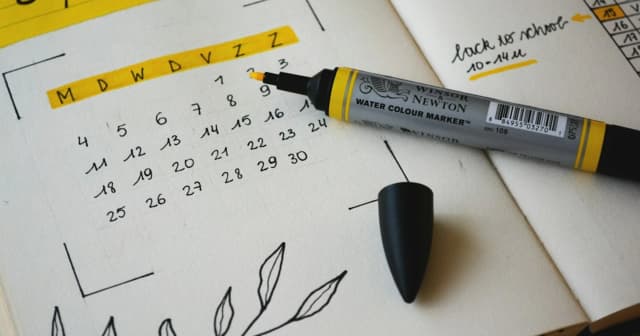
Put three things on the calendar the same evening: the check-in date, the home action set to repeat weekly, and how the teacher prefers to be reached. If the school has already announced the next conference window, add that too.
The check-in date is the entry most likely to be forgotten, because it sits several weeks out and nothing at school reminds you about it. Put it on the calendar as an event with the teacher's name and the one action in the note, so whoever opens it knows what to ask.
The home action belongs on the same weekday every week. If the plan is "explain one math problem on Tuesday," the Tuesday entry should say that in plain words. A babysitter or grandparent who covers that evening can then do it without asking.
When a child lives in two homes, consider giving both households the same three entries. Copying them into one shared calendar keeps each parent from relying on the other to pass along a date. Our guide to a co-parenting calendar both homes can trust covers which school events to put on it and who edits them.

The teacher's contact preference goes on the calendar entry too, or in the contact card for the school. Knowing whether the teacher prefers email or notes in the take-home folder tells you where to send the follow-up.
Before the next conference, ask your child the one thing they want their teacher to know, and write it at the top of the report card.
Frequently asked questions
What questions should I ask at a kindergarten parent-teacher conference?
What questions should I ask at a 1st or 2nd grade parent-teacher conference?
What questions should I ask at a 3rd or 4th grade parent-teacher conference?
Do the same questions work at a parent-teacher meeting?
Sources
All sources checked on November 3, 2026.
- "Parent and Family Involvement in Education: 2023," NCES 2024-113, publication listing (National Center for Education Statistics, September 17, 2024) https://nces.ed.gov/nhes/publications.asp
- "Parent and Family Involvement in Education: 2023," First Look report, NCES 2024-113 (National Center for Education Statistics, September 2024) https://nces.ed.gov/pubs2024/2024113.pdf
- "Parent and Family Involvement in Education: 2023," Summary of selected findings, NCES 2024-113 (National Center for Education Statistics, September 2024) https://nces.ed.gov/pubs2024/2024113_Summary.pdf#page=3
- "Parent–Teacher Conference Tip Sheets," parent section on preparation (Harvard Family Research Project, June 2009; hosted by Reading Rockets) https://www.readingrockets.org/sites/default/files/guide/ParentTeacherConferenceTipSheets.pdf#page=7
- "Parent–Teacher Conference Tip Sheets," parent section on questions and action plans (Harvard Family Research Project, June 2009; hosted by Reading Rockets) https://www.readingrockets.org/sites/default/files/guide/ParentTeacherConferenceTipSheets.pdf#page=8
- "Fall 2024 Parent-Teacher Conferences" (Signal Hill School District 181, October 21, 2024) https://www.signalhill181.org/o/shsd/article/1831282
- Sultan Middle School live feed, conference announcement (Sultan School District, fall 2023) https://shs.sultanschools.org/o/sms/live-feed?page_no=23
- "Parent-Teacher Conferences" (NYC Public Schools, 2026–27) https://www.schools.nyc.gov/get-involved/families/parent-teacher-conferences
- "Frequently Asked Questions: Section 504 Free Appropriate Public Education (FAPE)" (U.S. Department of Education, Office for Civil Rights, 2025) https://www.ed.gov/laws-and-policy/civil-rights-laws/disability-discrimination/frequently-asked-questions-section-504-free-appropriate-public-education-fape


