How many days are meat, soup, and pizza leftovers good for?
3 to 4 days is how long leftovers are good for in the fridge if they are cooked meat, poultry, soups, stews, or pizza, according to the FoodSafety.gov storage chart.

In this guide
3 to 4 days is how long leftovers are good for in the fridge if they are cooked meat, poultry, soups, stews, or pizza, according to the FoodSafety.gov storage chart.
That number assumes a refrigerator running at 40°F or below. Freezer times run longer and change by food, from 1 to 2 months for pizza to 2 to 6 months for cooked meat or poultry, and those months describe quality. When the leftovers come back out, FoodSafety.gov lists 165°F as the reheating temperature for leftovers of any type.
How long leftovers are good for, according to FoodSafety.gov
In a refrigerator at 40°F or below, the FoodSafety.gov Cold Food Storage Chart lists 3 to 4 days for leftover cooked meat or poultry, for soups and stews with vegetables or meat added, and for pizza. The chart page is dated September 19, 2023, and those rows read the same as of November 2026.
The refrigerator column only holds if the refrigerator does. The FDA says to keep the refrigerator at or below 40°F and the freezer at 0°F, in its consumer update "Are You Storing Food Safely?" (dated January 18, 2023). The FDA also points out that few refrigerator controls show the actual temperature, so the number on the dial does not tell you whether the box is at 40°F. The FDA recommends placing a freestanding appliance thermometer at the front, where it is easy to read, and checking it at least once a week.
If the thermometer and the dial disagree, our companion guide walks through setting the refrigerator itself.
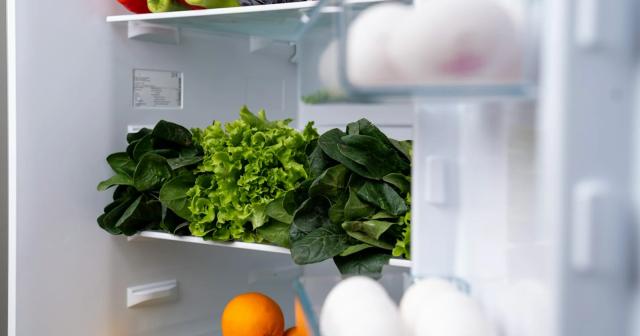
The 3-to-4-day count also assumes the food went into the refrigerator promptly. According to the FDA, leftovers need to be refrigerated or frozen within 2 hours, and foods that need refrigeration should not sit at room temperature for more than 2 hours, or 1 hour when the air is above 90°F. The FDA adds that putting hot food in the refrigerator does not harm the appliance, and that dividing leftovers into smaller containers helps them cool faster.
That 2-hour window is the one that slips on a big-meal day, when the turkey sits on the counter through dessert and a second round of coffee. A separate guide covers what that kind of dinner costs for a table of 10 in 2026.
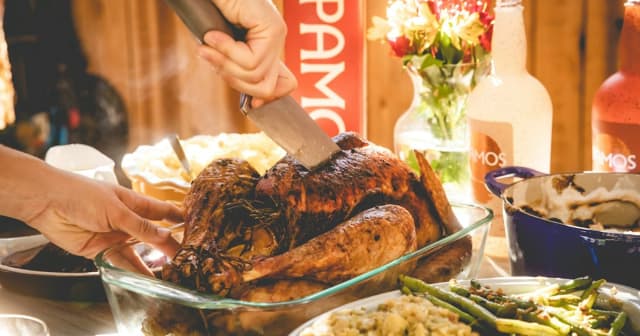
The chart's refrigerator window ends at 4 days. It does not offer a way to stretch that count to a fifth or sixth day.
This guide is general information, not medical advice. If you have concerns about your child’s health or safety, consult a pediatrician or another qualified professional. Follow product labels and manufacturer instructions. In an emergency in the United States, call 911. Elsewhere, use your local emergency number.

Which foods get their own row on the FoodSafety.gov chart
Turkey, soups, and pizza all land at 3 to 4 days in the refrigerator, so the fridge side is the same for all three. The freezer side is where they split.
| Food | Refrigerator (40°F or below) | Freezer (0°F, quality) | Source |
|---|---|---|---|
| Leftovers, cooked meat or poultry (turkey, ham, roast chicken) | 3 to 4 days | 2 to 6 months | FoodSafety.gov chart, Sep 19, 2023 |
| Soups and stews with vegetables or meat | 3 to 4 days | 2 to 3 months | FoodSafety.gov chart, Sep 19, 2023 |
| Pizza | 3 to 4 days | 1 to 2 months | FoodSafety.gov chart, Sep 19, 2023 |
Leftover turkey falls under the cooked poultry row, so a holiday bird is on the same 3-to-4-day clock as a weeknight roast chicken. This table repeats only those three chart rows.
Takeout and restaurant leftovers start with the same 2-hour rule. The FDA's storage page says its 2-hour limit also applies to leftovers, "doggie bags," and take-out foods. After that, the chart sorts food by what it is, so a box of restaurant chicken goes by the cooked poultry row and a container of soup goes by the soups row. The drive home and the time the bag sits on the counter both come out of that 2 hours.
Pizza is held to the same rule. The chart's 3 to 4 days for pizza assumes the slices went into the refrigerator within the 2-hour window, so a box left on the table overnight is outside what the chart covers.
What the freezer months on the chart measure
The freezer months are a quality guide. FoodSafety.gov states that its freezer storage guidelines "are for quality only," and that frozen foods stored continuously at 0°F or below can be kept indefinitely. The FDA says the same thing in different words: food will be safe indefinitely at 0°F, but quality will decrease the longer it stays in the freezer.
In practice, the months tell you when a container of turkey or soup will still taste like itself. A container of pizza at month 3 is past the chart's 1-to-2-month quality range. The chart does not call it unsafe, and it does not promise it will taste the way it did the first week.
The indefinite part of the FoodSafety.gov sentence applies only to food that has stayed at 0°F or below the whole time. A freezer that runs warm, or one that loses power, is outside what that sentence covers. The same kind of appliance thermometer the FDA suggests for the refrigerator works in the freezer, and the FDA suggests keeping one in each.
A power outage during a holiday week hits when the freezer is fullest and its contents are hardest to replace. Our guide to the first hour of an outage with kids covers what to handle first when the lights go out.
Reheating leftovers to 165°F
Leftovers should reach 165°F when reheated, according to the FoodSafety.gov "Safe Minimum Internal Temperatures" chart (page dated November 21, 2024). The chart lists that figure for leftovers of any type.
The chart gives 165°F as the internal temperature for reheated leftovers. The same 165°F applies to a plate of turkey and a bowl of soup.
Leftovers that came out of the freezer have the same 165°F target. The chart does not give a separate number for frozen leftovers.
As a household precaution, many families keep reheating as a step for an adult. Kids can set the table or pull the container from the refrigerator, but the stove and the thermometer reading stay with a grown-up. Once the reheated food is on the table, the FDA's 2-hour limit applies to it again.
How to date a container the night you cook
Write the food and the date it was cooked on every container before it goes into the refrigerator or freezer. A strip of masking tape and a marker are enough. With a date on the lid, nobody has to remember which day the stuffing was made.
| What to write | Refrigerator container | Freezer container |
|---|---|---|
| Food | "Turkey," "Squash soup" | "Turkey," "Squash soup" |
| Cooked on | The date of the meal | The date of the meal |
| Last day | After 3 to 4 days in the refrigerator | The end of the chart's quality range for that food |
The FDA's advice to divide leftovers into smaller containers helps here, too. Small containers cool faster, and each one carries its own date, so the household can pull out one portion of turkey without thawing all of it.
A child can help label the containers. A younger child can copy the date onto the tape while an adult reads it out loud, and an older child can write the whole label. Once an adult has filled and closed the containers, kids can carry them to the refrigerator or freezer. The hot pots, the carving, and anything raw stay with the adults.
Keeping raw food apart from the leftovers matters on the shelf as well. The FDA advises separating raw meat, poultry, seafood, and eggs from other foods in the refrigerator, which is easier when every cooked container is labeled and grouped on one shelf.
A holiday-week plan for what gets frozen on day one
On the night of a big meal, freeze whatever the household will not eat within 3 days, and keep only one or two meals' worth of each dish in the refrigerator. Deciding on the first night means the freezer gets food at the start of its quality window, and the refrigerator holds only what will be eaten before day 4.
| Day | Goes to the freezer | Stays in the fridge | Eat by |
|---|---|---|---|
| Meal day, within 2 hours | Extra turkey or other cooked meat, extra soup or stew, extra pizza | One or two meals' worth of each dish | |
| Days 1 to 2 | Nothing new | Leftover meals, oldest first | |
| Days 3 to 4 | Nothing new | Last of the fridge leftovers | End of the 3-to-4-day window |
| Later weeks | Containers come out as needed | Thawed portions | Pizza 1 to 2 months, soups and stews 2 to 3 months, cooked meat or poultry 2 to 6 months (quality) |
The split depends on how many people are eating and how many meals the household plans to make from the leftovers. A small gathering may freeze nothing at all, while a large one may send most of the extra meat to the freezer that first night.
Guests who take food home are on the same clock. Their food has the same 3-to-4-day refrigerator limit, assuming it was refrigerated promptly — the label on a take-home container is the only way the other household will know which day the food was cooked.
A roll of masking tape and a marker in the drawer next to the containers is the one thing to set out before the meal. That way the labels get written while everyone still remembers which day the food was cooked.
Frequently asked questions
How long are leftovers good for in the freezer?
How long are leftovers good for from a restaurant?
How long should Thanksgiving leftovers last in the fridge?
How long can leftovers sit out unrefrigerated?
Sources
All sources checked on November 14, 2026.
- Cold Food Storage Chart (FoodSafety.gov・September 19, 2023) https://www.foodsafety.gov/food-safety-charts/cold-food-storage-charts
- Cook to a Safe Minimum Internal Temperature chart (FoodSafety.gov・November 21, 2024) https://www.foodsafety.gov/food-safety-charts/safe-minimum-internal-temperatures
- Are You Storing Food Safely? (U.S. Food and Drug Administration・January 18, 2023) https://www.fda.gov/consumers/consumer-updates/are-you-storing-food-safely
- Refrigerator Thermometers: Cold Facts about Food Safety (U.S. Food and Drug Administration・March 5, 2024) https://www.fda.gov/food/buy-store-serve-safe-food/refrigerator-thermometers-cold-facts-about-food-safety


