Why the fridge stays shut in a power outage with kids
4 hours is the longest a closed refrigerator keeps food during a power outage, according to FoodSafety.gov, and that clock starts when the lights go out.

In this guide
4 hours is the longest a closed refrigerator keeps food during a power outage, according to FoodSafety.gov, and that clock starts when the lights go out.
With kids at home, the first hour of a power outage follows a short sequence. Turn on flashlights, keep the refrigerator and freezer closed, and keep any generator outdoors, at least 20 feet from the home, as the CPSC advises. Feeding and warmth come after that. If a carbon monoxide alarm sounds or anyone starts to feel sick, follow the CPSC's guidance to get outside to fresh air immediately.
What to do in the first hour
Light comes first, then the fridge, then the generator question, and only then dinner. Each of those steps comes from a federal consumer page, and the table below shows which one.
The CDC's emergency kit checklist for pregnant women, infants, and children (updated April 30, 2026) lists a flashlight, a battery-powered or hand-crank radio, extra batteries, and a portable charger. Those are the items to pull out in the first few minutes. Giving each child who is old enough a flashlight of their own keeps small hands busy and means nobody walks through a dark hallway without light.
| Step | What to do | Who says so |
|---|---|---|
| Light | Turn on flashlights and a battery-powered or hand-crank radio | CDC family emergency kit checklist |
| Fridge and freezer | Keep both doors closed as much as possible | FoodSafety.gov and CDC |
| Generator | Run it outside only, at least 20 feet from the home, with the exhaust facing away | CPSC |
| CO alarms | Battery-operated or battery-backup alarms on every level and outside sleeping areas | CPSC |
| Suspected CO poisoning | Follow the CPSC's guidance to get outside to fresh air | CPSC |
Phones count for more than usual once the power is off. A portable charger is on the same CDC list. Using a flashlight for light, and keeping the phone for calls and updates, leaves more battery for later in the night.
Write down the time the power went out, because the food decisions later depend on it. In the middle of a dark evening with kids asking questions, it is easy to lose track of whether the outage started at 6:10 or 7:30.
This guide is general information, not medical advice. If you have concerns about your child’s health or safety, consult a pediatrician or another qualified professional. Follow product labels and manufacturer instructions. In an emergency in the United States, call 911. Elsewhere, use your local emergency number.

Why the fridge stays shut and how long food keeps
Keep the fridge shut because FoodSafety.gov's time limits are for doors kept closed. A closed refrigerator keeps food for up to 4 hours, and a closed freezer holds its temperature for about 48 hours when full or about 24 hours when half full. Those figures come from FoodSafety.gov's power outage chart, which cites the USDA's Food Safety and Inspection Service and was last updated August 8, 2024.
As of October 2026, the CDC's infant feeding toolkit gives the same time windows and the same advice: while the power is out, keep the freezer and refrigerator doors closed as much as possible. The 4-hour count runs from the moment the power went out, not from the last time someone opened the door.
| Appliance | Door kept closed | How long (FoodSafety.gov, citing USDA) | What to do after |
|---|---|---|---|
| Refrigerator | Yes | Up to 4 hours | Discard refrigerated perishable food such as meat, poultry, fish, eggs, and leftovers after 4 hours without power |
| Full freezer | Yes | About 48 hours | Check items against the FoodSafety.gov chart |
| Half-full freezer | Yes | About 24 hours | Check items against the FoodSafety.gov chart |
In many houses the fridge gets opened out of habit, often by the youngest person in the room. A strip of tape across the handle, or a paper sign at a child's eye level, turns the rule into something they can see. When someone needs a snack or a drink, take out everything you expect to need for the next few hours in one trip and close the door.
FoodSafety.gov also says never to taste food to decide whether it can still be eaten. That applies to last night's leftovers in a child's lunch container as much as to a package of chicken. Use the time you wrote down in the first hour to decide what to discard.
Generators and carbon monoxide
A portable generator belongs outside only. If a CO alarm sounds or anyone starts to feel sick, follow the CPSC's guidance to get outside to fresh air immediately. The CPSC says to use generators at least 20 feet away from homes with the exhaust facing away, and never to run one inside a home or garage, even with the doors and windows open. Follow the manufacturer's instructions for your model as well.
The CPSC recommends battery-operated CO alarms, or CO alarms with battery backup, on every level of the home and outside sleeping areas, and it adds that interconnected alarms are best. Rules vary by state; check your state or city rules on where CO alarms are required.
The CPSC also lists symptoms of carbon monoxide poisoning, from headache and dizziness to sleepiness and confusion. Several of those look like an ordinary long evening, so getting outside does not depend on being sure it is CO.
Feeding a baby without power
The CDC recommends keeping single-serving ready-to-feed formula on hand and keeping the fridge and freezer closed during an outage. It also says to throw away opened or prepared formula that was in the refrigerator if the power has been off for 4 hours or more. That guidance is in the CDC's Infant and Young Child Feeding in Emergencies Toolkit, last updated August 12, 2026.
Before an outage, the CDC recommends that families that use any amount of formula keep ready-to-feed formula in single-serving cans or bottles in their emergency supplies. The same page suggests preparing ice, frozen containers of water, gel packs, and an appliance thermometer. The thermometer is what tells you whether the refrigerator has gone above 40°F, which is the other half of the CDC's rule for opened or prepared formula in the fridge.
For parents who pump, the CDC notes that hand expression or a manual breast pump lets you keep expressing milk without electricity. The CDC's emergency feeding checklist lists a manual pump "in case of a power outage," along with pump parts, power cords, and extra batteries.
For mixing powdered formula or preparing water, ask your pediatrician what fits your baby, ideally before the next storm season rather than during an outage.
Packing those baby supplies ahead of time is easier with a list. Our emergency kit guide for families with a baby covers what to gather before the next outage.
Keeping kids warm and calm overnight
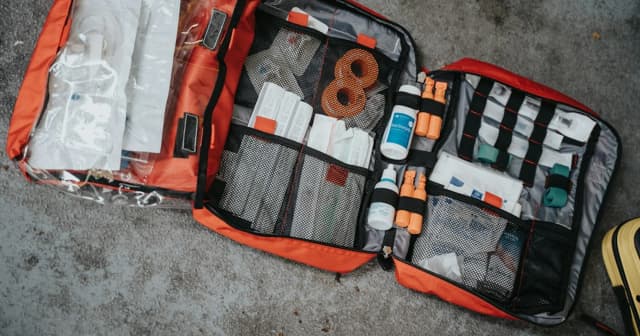
Use the blankets and extra clothes from your emergency supplies, keep everyone in one room, and explain the outage in a few plain, true sentences. Warm blankets and extra clothes appear on both CDC checklists, and the infant list also includes a portable crib.
Gathering the family's bedding into one room makes it easier to check on everyone during the night and keeps the flashlights in one place. A portable crib lets a baby sleep in that room in their own space. Older kids can help carry pillows and set up the room, which gives them something to do in the hour when the house feels strange.
The National Child Traumatic Stress Network recommends giving children simple, factual information about winter storms and including them in preparedness activities. Families can use the same approach for an outage. Say what happened ("the power is off on our street"), what the adults are doing about it, and which job each child has, such as holding a flashlight or guarding the fridge sign. Short answers that stay the same each time a child asks work better than long explanations at bedtime.
If the house gets cold overnight, watch the kids as well as the thermostat. The AAP's HealthyChildren page on winter play (updated January 27, 2026) treats hypothermia as a medical emergency. If you think a child may have hypothermia, act right away without waiting to be sure.
An outage during a winter storm adds a second set of problems, from road conditions to supplies for several days. Our winter storm checklist for families with kids covers what to prepare before the storm arrives.
When the power comes back
Use the outage time to decide what to discard from the refrigerator. If the power was off for 4 hours or more, FoodSafety.gov says to discard refrigerated perishable food such as meat, poultry, fish, eggs, and leftovers, and the CDC says to throw away any opened or prepared formula that was in the refrigerator.
The freezer follows its own clock: about 48 hours for a full freezer with the door kept closed, or about 24 hours for one that was half full. For anything you are unsure about, check the item on the FoodSafety.gov power outage chart instead of tasting it. Kids who helped guard the fridge door can help with the sorting too — reading labels aloud while an adult decides.
Then look at the emergency supplies. The CDC's family checklist says to check an emergency kit for expiration dates and functionality every six months. After an outage, the batteries that ran the flashlights and the radio are the obvious place to start, along with the portable charger that kept the phones going.
The next time the lights go out, the first thing to do after finding a flashlight is to write the time on a note and stick it to the fridge door.
Frequently asked questions
When should you throw out food after a power outage?
What is dangerous to do during a power outage?
How can kids stay warm during a power outage without heat?
What should you do with baby formula during a power outage?
Sources
All sources checked on October 20, 2026.
- Emergency kit checklist for pregnant women, infants, and children (Centers for Disease Control and Prevention, April 30, 2026) https://www.cdc.gov/children-and-school-preparedness/resources/emergency-kit-checklist-pregnant-women-infants-and-children.html
- Food safety during a power outage (FoodSafety.gov, citing USDA FSIS, August 8, 2024) https://www.foodsafety.gov/food-safety-charts/food-safety-during-power-outage
- Carbon Monoxide Information Center (U.S. Consumer Product Safety Commission, undated) https://www.cpsc.gov/Safety-Education/Safety-Education-Centers/Carbon-Monoxide-Information-Center
- Infant and Young Child Feeding in Emergencies Toolkit, special considerations (Centers for Disease Control and Prevention, August 12, 2026) https://www.cdc.gov/infant-feeding-emergencies-toolkit/php/special-considerations.html
- Infant and Young Child Feeding in Emergencies Toolkit, checklist (Centers for Disease Control and Prevention, August 3, 2026) https://www.cdc.gov/infant-feeding-emergencies-toolkit/php/checklist.html
- Winter Storm Resources (National Child Traumatic Stress Network, undated) https://www.nctsn.org/what-is-child-trauma/trauma-types/disasters/winter-storm-resources
- Playing Outside in Winter (American Academy of Pediatrics, HealthyChildren.org, January 27, 2026) https://www.healthychildren.org/English/safety-prevention/at-play/Pages/Winter-Safety.aspx?sf34818620=1


