Winter storm with kids ahead, what do you prep first?
Say the forecast shows heavy snow by Thursday night and the school district has not called Friday yet. One kid wants to go sledding, and the car has a quarter tank of gas.

In this guide
Say the forecast shows heavy snow by Thursday night and the school district has not called Friday yet. One kid wants to go sledding, and the car has a quarter tank of gas.
A winter storm checklist for a family with kids runs in three stages: stock food, water, and the car before the storm, keep the house warm without a carbon monoxide risk during it, and check the wind chill before anyone goes out to play afterward.
What to stock before the storm hits
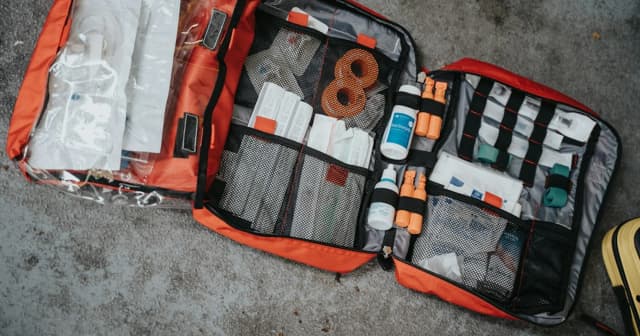
Plan for three days of nonperishable food and water for everyone in the house. The AAP's HealthyChildren.org family disaster supplies list puts water and nonperishable food for 3 days among its core supplies. The CDC's family emergency checklist adds that water should be at least one gallon per person per day for several days.
The rest of the CDC checklist, as of October 2026, covers a house that may lose power: a flashlight, a battery-powered or hand-crank radio, extra batteries, a portable charger and phone chargers, a first-aid kit, warm blankets, and copies of identification, documents, and contact details. By that math, a family of four that wants three days of water needs at least 12 gallons.
Kids can take part in this stage. The National Child Traumatic Stress Network suggests giving children simple, factual information about winter storms and including them in preparedness activities. A younger child can count flashlights, and an older one can check that each charger in the kit works.
The whole storm, from the first forecast to the thaw, breaks down like this.
| Stage | Home | Car | Kids |
|---|---|---|---|
| Before | Food and water for 3 days (AAP); 1 gallon of water per person per day (CDC) | Gas tank close to full, or EV charged (NHTSA); winter kit packed | Simple, factual talk about the storm and a job in the prep (NCTSN) |
| During | Portable generator outside only, at least 20 feet from the home (CPSC) | If roads are not in good shape, consider postponing nonessential travel until they are cleared (NHTSA) | Check the wind chill before outdoor play (NWS, AAP) |
| After | Restock what you used; review the kit every 6 months (CDC, AAP) | Replace anything used from the car kit | Watch for frostbite and hypothermia signs (AAP) |
Families with a baby need feeding and diaper supplies this list does not cover.
This guide is general information, not medical advice. If you have concerns about your child’s health or safety, consult a pediatrician or another qualified professional. Follow product labels and manufacturer instructions. In an emergency in the United States, call 911. Elsewhere, use your local emergency number.

The winter car kit and when not to drive
Pack the vehicle with the winter kit NHTSA lists, and keep the gas tank close to full whenever possible. NHTSA's Winter Weather Driving Tips page also says to keep an electric or hybrid-electric vehicle charged.
The NHTSA list starts with tools for getting unstuck and being seen: a snow shovel, a broom, an ice scraper, traction material, jumper cables, a flashlight, warning devices, a first-aid kit, and blankets. It ends with a cell phone and charger, water, food, and any necessary medicine.
The CDC and AAP both suggest reviewing a home emergency kit every six months, and it is easy to open the car kit on the same day.
On whether to drive, NHTSA says that if your roads are not in good shape, consider postponing non-essential travel until the roads are cleared. The call depends on your roads and your trip — and a closed school is one less reason to be out.
Heat, power, and carbon monoxide during the storm
Keep working carbon monoxide (CO) alarms in the house. According to the U.S. Consumer Product Safety Commission (CPSC), a portable generator goes outside only, at least 20 feet from the home, with the exhaust facing away.
The CPSC also says never to run a portable generator inside a home or garage, even with the doors and windows open. For a generator, follow the manufacturer's instructions.
For alarms, the CPSC recommends battery-operated CO alarms, or CO alarms with battery backup, on every level of the home and outside sleeping areas, and it notes that interconnected alarms are best. That is a recommendation. Whether CO alarms are required in your home depends on state and local rules.
If you suspect carbon monoxide poisoning, get outside to fresh air immediately, the CPSC says. The symptoms it lists are headache, dizziness, weakness, nausea, vomiting, sleepiness, and confusion. In a house where everyone is tired and stuck indoors, those are easy to blame on the storm.
A storm that brings down power lines also starts the clock on the fridge and freezer.
How cold is too cold for kids to play outside?
In general, kids should avoid playing outside when the temperature or the wind chill is below −15°F, according to the AAP's HealthyChildren.org page on winter play (updated January 27, 2026). As of October 2026, that is consumer guidance, not a federal rule or a school closure threshold.
The wind chill is how cold people and animals feel outside, because wind increases heat loss from exposed skin, according to the National Weather Service. NWS defines it only for air temperatures at or below 50°F with wind above 3 mph. The NWS also notes that its wind chill tests used adults, and it advises using the chart as a starting point and being even more cautious with children.
| Source | What it says | Who it applies to |
|---|---|---|
| AAP, HealthyChildren.org | In general, avoid outdoor play when the temperature or wind chill is below −15°F | Kids playing outside |
| National Weather Service wind chill chart | Tested on adults; use it as a starting point and be more cautious with children | Anyone outdoors in wind and cold |
| Your local NWS office | Sets the criteria for Cold Weather Advisories and Extreme Cold Warnings | Your forecast area |
| Your state, via Child Care Aware of America | Providers should consult their state's cold-weather requirements | Child care programs |
Cold Weather Advisories and Extreme Cold Warnings follow criteria set locally, the NWS says, so no single national cold number sits behind them.
For child care, Child Care Aware of America tells providers to consult their state's requirements about cold weather. Rules vary by state; check your state's child care requirements and your school district's weather policy.
Frostbite and hypothermia signs to watch for
According to the AAP's HealthyChildren.org page, a child with hypothermia may start shivering, then become sluggish or clumsy, or slur their words. Frostbitten skin may hurt or feel like it is burning, then quickly go numb. It may also turn white or pale gray and form blisters.
Act right away if you suspect hypothermia, which the AAP page describes as a medical emergency.
Several of these signs show up in how a child moves or talks before the child says anything about being cold. This guide lists warning signs only. For what to do while help is on the way, follow the instructions of the emergency dispatcher or your child's pediatrician.
When school closes for days
Before a multi-day closure, decide who stays with the kids, how the family stays in touch, and when the kit gets restocked. Each of those gets harder to sort out once the roads are closed.
Child care programs answer to their state's cold-weather requirements, so ask your provider how it decides to close, and agree on which adult covers which day if both of you work.
For staying in touch, the CDC checklist includes contact details among the paper copies in the kit. A printed list of phone numbers still works if a phone dies.
After the storm, restock what you used. The CDC says to check a kit for expiration dates and functionality every six months, and the AAP says to review the contents at least every 6 months because food, water, batteries, and medications may need replacing. Right after a storm, you know exactly which batteries and snacks are gone.
Before this week's forecast firms up, count the gallons of water in the house and divide by the number of people. The answer, in days, is where your checklist starts.
Frequently asked questions
How cold is too cold for kids to have outdoor recess?
How many days of food and water does a family need for a winter storm?
What should be in a winter car emergency kit?
Where should a generator go during a winter storm?
Sources
All sources checked on October 20, 2026.
- Emergency kit checklist for pregnant women, infants, and children (Centers for Disease Control and Prevention, April 30, 2026) https://www.cdc.gov/children-and-school-preparedness/resources/emergency-kit-checklist-pregnant-women-infants-and-children.html
- Family Disaster Supplies List (American Academy of Pediatrics, HealthyChildren.org, January 14, 2025) https://www.healthychildren.org/English/safety-prevention/at-home/Pages/Family-Disaster-Supplies-List.aspx
- Winter Storm Resources (National Child Traumatic Stress Network, undated) https://www.nctsn.org/what-is-child-trauma/trauma-types/disasters/winter-storm-resources
- Winter Weather Driving Tips (National Highway Traffic Safety Administration, undated) https://www.nhtsa.gov/winter-driving-tips
- Carbon Monoxide Information Center (U.S. Consumer Product Safety Commission, undated) https://www.cpsc.gov/Safety-Education/Safety-Education-Centers/Carbon-Monoxide-Information-Center
- Playing Outside in Winter (American Academy of Pediatrics, HealthyChildren.org, January 27, 2026) https://www.healthychildren.org/English/safety-prevention/at-play/Pages/Winter-Safety.aspx?sf34818620=1
- Understanding Wind Chill (National Weather Service, undated) https://www.weather.gov/safety/cold-wind-chill-chart
- Winter Weather and Extreme Cold (Child Care Aware of America, undated) https://www.childcareaware.org/our-issues/crisis-and-disaster-resources/tools-publications-and-resources/winter-weather/


