A three-weekend plan to declutter toys before gifts arrive
The toy bin no longer closes, and a grandparent has already asked what the kids want this year. Nobody can say which toys in that bin still get played with.

In this guide
The toy bin no longer closes, and a grandparent has already asked what the kids want this year. Nobody can say which toys in that bin still get played with.
To declutter toys before the holidays without one long, tearful Saturday, split the work across the three November weekends proposed here. Broken and recalled toys leave first, you sort the remaining toys into keep, donate, or recycle piles with your child, and donations are dropped off before new gifts start arriving. Before any toy leaves the house, look it up in the U.S. Consumer Product Safety Commission (CPSC) recall search. CPSC says that people who give away used products for free cannot sell or donate products that do not meet the requirements of the law.
Why November, and why three weekends
Start in early November and give each of three weekends a single job, so the toys are sorted and the donations are gone before new gifts arrive. In 2026, Thanksgiving falls on Thursday, November 26, according to the federal holiday schedule published by the U.S. Office of Personnel Management. Finishing by the weekend before that week keeps the drop-off ahead of Thanksgiving.
By our count of the 2026 calendar, the three full weekends before Thanksgiving week are November 7–8, November 14–15, and November 21–22. Check those dates against your own calendar, especially if one of them is already taken by a game or a work shift, and slide the plan by a week where you need to.
Under this proposed schedule, there is about a week between the sort and the drop-off, so a child who changes their mind about a stuffed bear has time to say so.
| Weekend | Proposed dates (2026, by our count) | Task | What leaves the house |
|---|---|---|---|
| One | Nov 7–8 | Pull out broken toys and look up the rest in the CPSC recall search | Broken toys go to trash or recycling; recalled toys are set aside |
| Two | Nov 14–15 | Sort keep, donate, or recycle with your child | Nothing yet; donation bags are packed |
| Three | Nov 21–22 | Check local donation rules and drop off | The donation bags |
This guide is general information, not medical advice. If you have concerns about your child’s health or safety, consult a pediatrician or another qualified professional. Follow product labels and manufacturer instructions. In an emergency in the United States, call 911. Elsewhere, use your local emergency number.

Weekend one, broken and recalled toys go first
Broken toys and recalled toys leave first, before your child sorts anything else. Neither belongs in a donation bag, and clearing them out makes the pile smaller before the harder decisions start.
Pull out anything that no longer works the way it should: a car with a snapped axle, a puzzle missing so many pieces it can't be finished, a doll whose arm keeps falling off. Older kids can help with this part, since a toy that is already broken is often an easy first decision. Broken toys go to the trash or to recycling. Check your local recycling program's list before a plastic toy goes in the curbside bin.
Then look up the remaining toys in CPSC's recall search at cpsc.gov/Recalls. As of October 2026, the page is titled "Search Recalls & Product Safety Warnings." CPSC notes on the page that its data "updates weekly as new recalls are announced." Hand-me-downs count too, since a toy may have been recalled before it reached your house.
If a toy matches a recall, set it apart from the donation pile and read that recall notice. Since the data update weekly, check the current notice instead of relying on an old email or a friend's memory of it.
Weekend two, keep, donate, or recycle with your child in the room
Sort the rest of the toys with your child in the room, one bin or one shelf at a time. Doing it together means the child knows where each toy went, and nobody has to explain in December why a favorite truck is gone.
Dump one bin onto a blanket and set out two bags and a box: one bag for donations, one for recycling, and the box for anything that stays. Ask your child when they last played with a toy, or which of two similar toys they would keep. Questions like those get real answers faster than asking whether they still want something, which tends to get a yes for everything. Stop when your child starts saying no to everything, and come back to the next bin later that weekend.
If there is a child younger than 3 in the house, the keep pile needs one more look. CPSC advises keeping small balls and toys with small parts away from children younger than 3, and following the age guidance and other safety information on toy packaging. Toys an older sibling decides to keep still fall under that advice.
The condition of each toy determines where it goes.
| Condition of the toy | Where it goes | Rule or source |
|---|---|---|
| Played with recently, complete, working | Keep | Your family's call |
| Outgrown but complete and gently used | Donation bag | Acceptance varies by local Goodwill organization and Salvation Army location |
| New and unwrapped | A new-toy drive such as Toys for Tots | Toys for Tots collects new, unwrapped toys |
| Broken or missing pieces | Recycling or trash | No single rule; check your local recycling program |
| Matches a CPSC recall | Set aside and follow the recall notice | CPSC resale guidance covers free giveaways |
Weekend three, where donated toys are accepted and what is not
Used toys go to local thrift and donation centers, so check the local policy before loading the car. CPSC says products that do not meet the requirements of the law cannot be donated, so keep them out of the bags.
Goodwill says that what you can bring to a donation center will depend on the Goodwill organization you are donating to, and its national donation page sends you to your local one. The Salvation Army's national thrift store FAQ lists toys among items it generally accepts in gently used condition, and it also says acceptance varies with local ordinances and need. Either way, the local store has the final word.
CPSC's Resale/Thrift Stores Information Center says its resale rules include thrift stores, consignment stores, charities, and individuals holding yard sales and flea markets. CPSC's 2021 Resellers Guide adds that "persons who give away used products for free cannot sell or donate products that do not meet the requirements of the law." By CPSC's wording, that covers a toy handed to a neighbor for free as well as one sold at a yard sale.
Toys for Tots is a different kind of drive. The Marine Toys for Tots Foundation describes community members dropping new, unwrapped toys in collection boxes at local businesses, so the used toys from this declutter do not belong there. If the sort turns up a new, unwrapped toy, check the Toys for Tots local campaign finder for your area.
How do you make room before new gifts arrive?
Agree on a one-in, one-out rule before the gifts arrive, then tell gift-givers how much space there is. Under one-in, one-out, each new toy that comes into the house means one existing toy goes to the donation bag, and the child picks which one.
The rule is easier to keep when it is specific. A new board game might replace a game nobody plays, and a new stuffed animal might replace one from the bottom of the bin. You can give the rule a grace period, such as the end of winter break, so the swap does not happen while wrapping paper is still on the floor.
A short message to relatives in November with the child's current interests and a note about shelf space gives them something to work with, such as a book series, a class, or one larger gift shared among several people. If grandparents give most of the toys in your family, it helps to know what a typical grandparent gift budget looks like before that conversation.

Once the shelves have open space, each kept toy needs a spot of its own, or the bin fills back up by February. A separate guide looks at a one-home-per-category setup meant to let kids put toys away without a parent directing every piece.
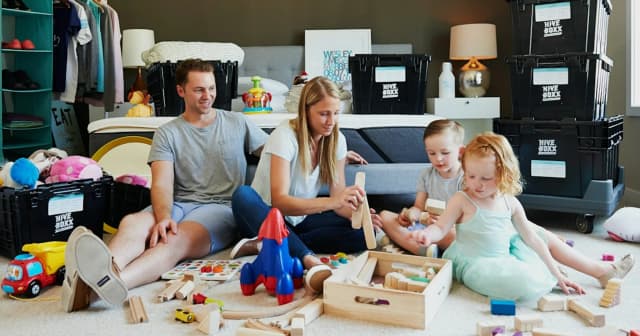
What to do when your child says no to everything
Use a box and a date. Put the toys your child refuses to part with into one box together, write a date on the side, and store it somewhere out of sight.
The date should be far enough away to test how much those toys are missed — the end of winter break, for example. If your child asks for something in the box before then, it comes back out with no argument. When the date arrives, open the box together. Toys nobody asked for go to the donation bag, and the child decides whether anything gets one more reprieve.
This keeps the decision in the child's hands. Quietly removing toys while a child is at school skips the argument, but it can cost trust the first time the child notices something missing.
Toy rotation is a related approach, and a separate guide looks at what a University of Toledo study on toy numbers actually measured.
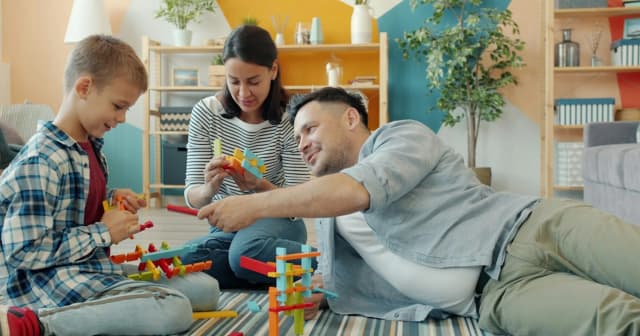
Write the date on the box in marker before it goes up on the closet shelf.
Frequently asked questions
How do you declutter toddler toys?
How do I get my child to donate toys without it feeling like a punishment?
What do you do for the holidays when you don't want your kids to get a million more toys?
What are some tips for decluttering and donating toys that children have outgrown?
Sources
All sources checked on October 30, 2026.
- "Search Recalls & Product Safety Warnings" (U.S. Consumer Product Safety Commission) https://www.cpsc.gov/Recalls
- "Resale/Thrift Stores Information Center" (U.S. Consumer Product Safety Commission) https://www.cpsc.gov/Business--Manufacturing/Business-Education/ResaleThrift-Stores-Information-Center
- "Resellers Guide to Selling Safer Products," Version 1.0 (U.S. Consumer Product Safety Commission, 2021) https://www.cpsc.gov/s3fs-public/Resellers-Guide-Updated-Final-3-3-21.pdf#page=4
- "Toys" consumer safety page (U.S. Consumer Product Safety Commission) https://www.cpsc.gov/id/Safety-Education/Toys
- "Donate Goods" (Goodwill Industries International) https://www.goodwill.org/give/donate-goods/
- Thrift Store and Donation Center FAQ (The Salvation Army) https://satruck.org/
- "How the Program Works" (Marine Toys for Tots Foundation) https://www.toysfortots.org/about/how-the-program-works/
- 2026 Holiday Schedule (U.S. Office of Personnel Management, 2026) https://www.opm.gov/policy-data-oversight/pay-leave/federal-holidays/


