Questions to ask grandparents and when to ask them
After dinner, someone suggests asking Grandma about growing up. Nobody has a list, so the phone ends up recording the dishwasher.

In this guide
After dinner, someone suggests asking Grandma about growing up. Nobody has a list, so the phone ends up recording the dishwasher.
Questions to ask grandparents can follow a set order over about 20 minutes. Start with easy questions about childhood, move to the stories only they can tell, and save the deepest questions for the last five minutes. Before anyone presses record, ask everyone at the table whether it's okay. Then set the phone down and let a child run the list from a card. Thanksgiving Day falls on Thursday, November 26, in 2026, which leaves enough time to write that card this month.
Start with the easy questions
In this plan, the first five minutes go to places and everyday things: the house they grew up in, what they ate, what they did after school. These questions have short, concrete answers, so a grandparent can warm up and the child asking can find a rhythm before anything personal comes up.
The whole interview can follow this order. The minutes are this guide's own suggestion with no study behind them, so use them as a guide for the person holding the timer. If the house question turns into a long story, that story is the interview.
| Minutes | Question tier | Example question |
|---|---|---|
| 0–5 | Easy: places and everyday life | What did your house look like when you were my age? |
| 5–10 | Stories: family and growing up | What were your parents like? |
| 10–15 | Stories: how they met, and work | What was your first real job, and what did a normal day look like? |
| 15–20 | Deep: pride and advice | What are you proudest of? |
Five easy openers written in short, plain words:
- What did your house look like when you were my age?
- What did you eat for breakfast as a kid?
- What games did you play outside?
- What did you do on a day with no school?
- What was the first thing you ever bought with your own money?
Each one starts with "what," which keeps it from being a yes-or-no question. A grandparent who answers "Oh, nothing special" can usually be pulled back in with "What did it look like?" or "Who else was there?"

Move to the stories only they can tell
In this plan, the middle ten minutes go to family history, how they met, and work. Nobody else at the table can answer these questions, and the answers run longer, so they get the most time in the 20-minute plan.
Pick a few from this list:
- What were your parents like, and what did they do for work?
- Where did our family live before you were born?
- How did you two meet?
- What was your first home together like?
- What job did you have the longest, and what was a normal day?
- What dish did your family make that you still think about?
If one good question fills the whole section, that's fine. The child running the list doesn't need to get through every line. Move to the next tier when the timer says so, even if this one isn't finished, because the last five minutes hold the deep questions.
Names and places come up in this section, and they're the hardest part to understand later on an audio file. Have the child ask, "How do you spell that?" for a town, a street, or a great-grandparent's name.
If a grandparent starts describing a dish ingredient by ingredient, that recipe may deserve its own card. For family recipes, keep the original cards safe while you make copies.

Save the deep questions for the last five minutes
Questions about pride, hard times, and advice go last, after the easier questions. End with one question that hands the last word back to the grandparent.
- What are you proudest of?
- What was a hard year for you, and what helped?
- What do you hope your grandkids know about you?
- What advice would you give your younger self?
- Is there anything I didn't ask that you want to tell me?
A grandparent can always say "pass," and the child should hear that before the interview starts. The list also stays away from religion and politics. If a grandparent brings either one up, let them talk, and let the next question on the card move things along.
The closing question is the same every time: "What should I ask you next time?" It gives the grandparent a say in the next recording and turns one Thanksgiving interview into a series.
Ask before you record, then set the phone down
Before pressing record, ask permission to record, then ask who can hear it later and where it will be kept. Ask everyone within earshot.
Recording-consent rules vary by state, which is why the Reporters Committee for Freedom of the Press keeps a state-by-state guide to recording laws. Rules vary by state; check your state's rules if you have a question about a specific situation. At a family table, asking everyone first is a courtesy that settles the question before it comes up.
The three permission questions, in plain words:
- Is it okay if we record this?
- Is it okay if we send it to the rest of the family, or share it anywhere else?
- Is it okay if we keep it on the phone and a backup copy?
A grandparent may say yes to the recording and no to sharing. That's a complete answer. Write it down with the file name so whoever has the file later knows what was agreed.
A loud holiday table is the hardest place to get usable audio. Once the meal is over, move the interview to a smaller room or the far end of the table with just the child and the grandparent. Turn off the TV and the music. Put the phone flat on the table, closer to the grandparent than to the child, and silence notifications so a text doesn't interrupt.
Record a few seconds and play it back before you start for real. Then have the child say the date, the place, and who is talking at the top of the recording: "It's Thanksgiving, November 26, 2026, at Grandma's kitchen table." Those few seconds are the label that will matter most later.
After that, nobody holds the phone, so there's no screen held up between the grandparent and the grandchild.
Where the recording lives afterward
For backups, the National Archives recommends the 3-2-1 rule: three copies, stored on two different media, with one copy kept off-site. For a family audio file, that could be the original on the phone and a copy on a computer or external drive. The third copy could go in a cloud folder or to a relative in another house.
Name the file and back it up soon after the interview. A recording that exists only on one phone can be lost along with that phone.
Where the file lands first depends on the app. On iPhone, Apple says that when Voice Memos is turned on in iCloud settings, recordings appear on the iPhone, iPad, and Mac signed in to the same Apple Account. Apple's guide also says recordings can be shared through AirDrop, Mail, Messages, and other options.
On a Pixel 3 or later, or on a Pixel Tablet, Google's Recorder keeps files only on that device. They stay there unless you turn on backup, share them, copy them to another app, or save them somewhere like Google Drive. Google's Recorder instructions are written for Pixel devices, so they may not apply to other Android phones; check that phone's own help pages.
| Option | Where the file is saved | Who can hear it later | Sent to the Library of Congress |
|---|---|---|---|
| Voice Memos (iPhone) | On the iPhone; also on your other Apple devices if Voice Memos is on in iCloud settings | You, plus anyone you share it with | Not covered in Apple's guide |
| Recorder (Pixel 3 and later, Pixel Tablet) | Only on the Pixel device unless you back it up, share, copy, or save it elsewhere | Depends on whether you back it up, share, or copy it | Not covered in Google's guide |
| StoryCorps App (free as of October 2026) | On the phone, then on archive.storycorps.org if you publish it | Depends on the setting you choose: Public, StoryCorps Community, or Private | Only interviews published to archive.storycorps.org |
The National Archives suggests adding four pieces of basic information to digitized family files: who, what, where, and when. A file name like "Grandma interview, Thanksgiving 2026, kitchen table, asked by oldest grandchild" covers all four, and the spoken label at the top of the recording backs it up.
If the family is making a time capsule, put the question card inside with the file name written on the back.
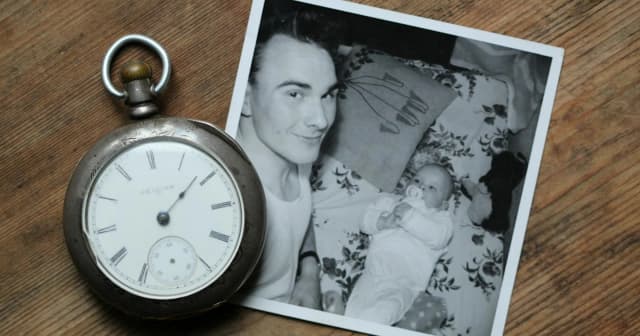
StoryCorps runs the Great Thanksgiving Listen, which it describes as an annual initiative that encourages people to record someone's story for future generations. Its 2026 campaign page was posted on October 1, 2026. For the 2026 campaign, StoryCorps says participants can use the free StoryCorps App to record someone in the same room, or StoryCorps Connect to record someone in a different location. The app helps you prepare questions, records on your phone, and can upload the audio to the Library of Congress and the StoryCorps Archive.
Uploading is a step you choose. According to StoryCorps' Help Center, an app interview has to be published to archive.storycorps.org to become part of the StoryCorps archive at the American Folklife Center at the Library of Congress. Archiving and public access are also separate.
Whether to publish is the third permission question from earlier, asked again with the real options in front of the grandparent, including the Private setting.
Many grandparents who would enjoy hearing the recording don't use apps at all. The same options used for sharing photos with grandparents can work for an audio file.
What a 10-year-old can run on their own
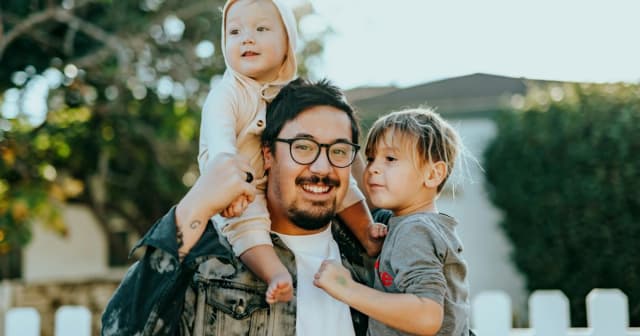
In this plan, a child of about 10 gets a card with the questions in large print, a timer, and two follow-up lines they can use anytime. An adult handles the permission questions and the test recording, then steps back.
Write the easy and middle questions on the front of an index card and the deep questions on the back. In this plan, turning the card over at minute 15 tells the child the interview is moving to its last part. Set a phone timer or a kitchen timer for 20 minutes, and mark each five-minute point on the card so the child knows when to move on.
The two follow-up lines keep most of the interview moving:
- "What happened next?"
- "Can you tell me more about that?"
Teach one more habit before the interview: after a grandparent finishes an answer, pause for a moment before asking the next question. A grandparent may add a detail after a pause, and a child racing to the next line on the card can cut it off.
Younger kids can run the first few easy questions and then hand the card to an older cousin or a parent. Teenagers can run the whole interview and take on the file naming and backup afterward. The adult's part stays small on purpose: ask permission, check the sound, and stay out of the conversation.
Kids who have already run a short family meeting know the pattern of reading a question and waiting for the answer. The family meeting agenda below uses a similar format.
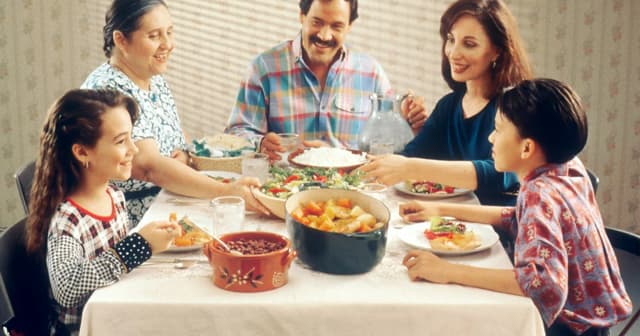
The card takes the longest to get right, and it's easier to write on a quiet weeknight than on Thanksgiving morning. Sit down with the child who will be asking and read the first few questions out loud together. Let them cross out any they wouldn't want to ask their own grandparent.
Frequently asked questions
What questions should you ask grandparents about their childhood?
What questions should you ask grandparents about family history?
What questions can grandparents answer about their grandchildren?
What questions should you ask grandparents about their life?
Sources
All sources checked on October 29, 2026.
- "Find Connection with #TheGreatListen" (StoryCorps, October 1, 2026) https://storycorps.org/thanksgivingstories/
- "The StoryCorps App" (StoryCorps) https://storycorps.org/participate/storycorps-app/
- "How do I record an interview with the StoryCorps App?" (StoryCorps Help Center) https://support.storycorps.org/help-center/how-do-i-record-an-interview-with-the-storycorps-app
- "Are all interviews in the online archive archived at the Library of Congress?" (StoryCorps Help Center) https://support.storycorps.org/help-center/are-all-interviews-in-the-online-archive-archived-at-the-library-of-congress
- "How do I update my interview's privacy settings on archive.storycorps.org?" (StoryCorps Help Center) https://support.storycorps.org/help-center/how-do-i-update-my-interviews-privacy-settings-on-archivestorycorpsorg
- 2026 federal holidays (U.S. Office of Personnel Management, 2026) https://www.opm.gov/policy-data-oversight/pay-leave/federal-holidays/
- "Make a recording in Voice Memos on iPhone" (Apple iPhone User Guide) https://support.apple.com/en-gb/guide/iphone/iph4d2a39a3b/ios
- "Share a recording in Voice Memos on iPhone" (Apple iPhone User Guide) https://support.apple.com/en-sa/guide/iphone/iph3d6dc359/ios
- "Create, edit & delete a recording on your Pixel device" (Google Pixel Phone Help) https://support.google.com/pixelphone/answer/16267367?hl=en-419
- "Save and share recordings and transcripts" (Google Pixel Phone Help) https://support.google.com/pixelphone/answer/16267696?hl=en-gb
- "Reporter's Recording Guide" (Reporters Committee for Freedom of the Press) https://www.rcfp.org/reporters-recording-guide/
- "Digitizing Family Papers and Photographs" (National Archives, May 26, 2021) https://www.archives.gov/preservation/family-archives/digitizing


